
What Is Anthracnose?
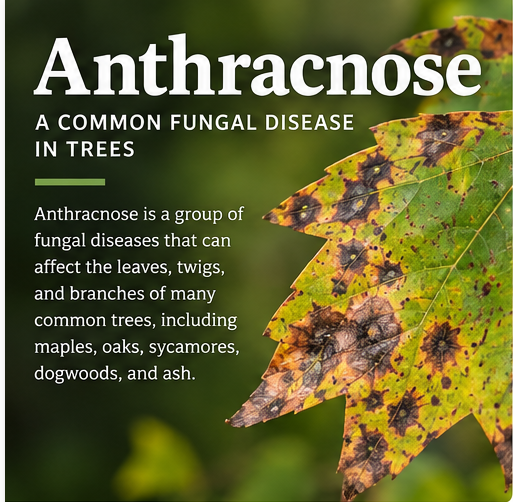
Anthracnose is a group of fungal diseases that can affect the leaves, twigs, and branches of many common shade and ornamental trees. Trees such as sycamores, maples, oaks, dogwoods, and ash can be susceptible, although symptoms and severity vary depending on the tree species and environmental conditions.
Anthracnose often becomes more noticeable following cool, wet weather, which can create favorable conditions for fungal development and infection. While established trees can often tolerate mild cases, repeated or severe infections can place additional stress on a tree and affect its appearance and overall vigor.
Recognizing the Signs of Anthracnose
Anthracnose symptoms can sometimes be mistaken for drought stress, leaf scorch, or other tree health problems. Common signs may include:
- Brown, tan, or black spots and irregular blotches on leaves
- Discoloration that follows leaf veins
- Curling or distorted leaves
- Premature leaf drop
- Dieback of young shoots or twigs
- Thin or sparse-looking canopies in more severe cases
The severity of anthracnose can vary from year to year depending on weather conditions, tree species, and overall tree health. Trees already experiencing environmental stress may have a more difficult time recovering from repeated infections.
Professional Tree & Plant Health Care
Proper identification is an important first step because anthracnose symptoms can resemble several other tree health issues.
Liberty Tree & Landscape Management can evaluate affected trees, identify signs of disease and stress, and recommend a plant health care program based on the tree and site conditions.
Depending on the situation, recommendations may include treatments designed to help manage disease pressure, properly timed pruning, fertilization or soil care to support tree vigor, and other cultural practices that promote healthier growing conditions.
Our goal is not only to address visible symptoms but also to help strengthen the overall health and resilience of your trees.
Reduce Stress and Support Tree Health
Homeowners can take several steps to help reduce disease pressure and support affected trees.
Rake and remove fallen infected leaves and debris from beneath susceptible trees. When appropriate, proper pruning can improve canopy structure and air circulation. Avoid unnecessary injury to trunks and roots, and provide appropriate watering during periods of drought or prolonged heat.
Most importantly, keep an eye on changes in the canopy. Significant leaf spotting, premature leaf drop, twig dieback, or recurring symptoms should be evaluated by a tree care professional.
Because treatment and management options can depend on the tree species, severity of infection, and time of year, early identification can make planning much easier.

Various tree species can be affected by anthracnose, including maple, oak, sycamore, dogwood, and other common shade and ornamental trees. Symptoms can vary by species but often include leaf spots, browning, distortion, and premature leaf drop.
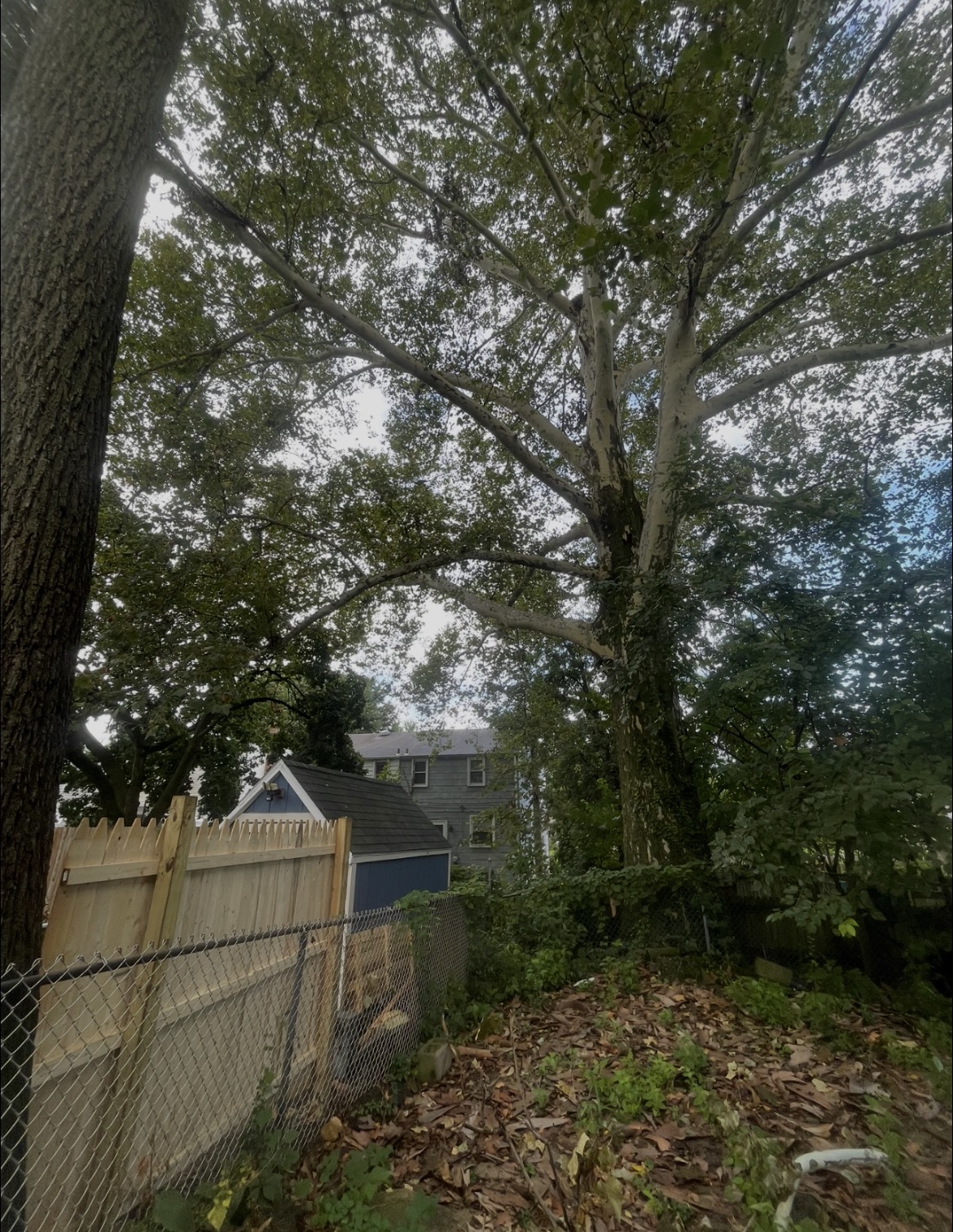
Noticing your tree losing leaves earlier than expected? Premature leaf drop, brown spots, and thinning foliage may indicate anthracnose or other tree health concerns. Early identification and proper Plant Health Care can help protect your trees from additional stress.
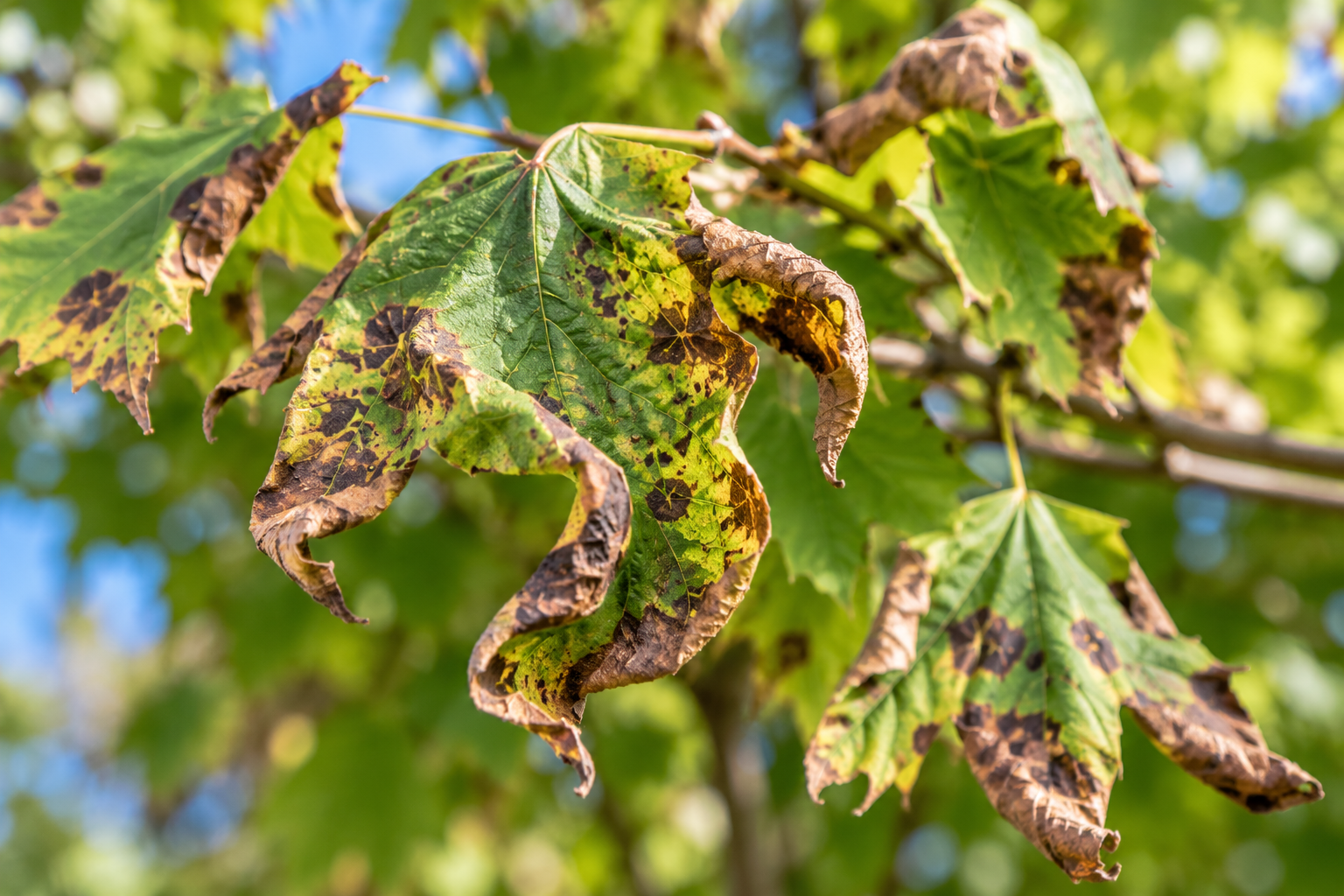
Curling, browning, or distorted leaves can be a sign of anthracnose and other tree health problems. Monitoring these symptoms and identifying the cause early can help prevent additional stress and protect the tree’s long-term health.
Protect the Long-Term Health of Your Trees
A single mild case of anthracnose may primarily affect a tree’s appearance, but repeated infections combined with drought, heat, poor soil conditions, or other stresses can weaken a tree over time.
Proactive tree care helps identify problems before they become more serious and gives your trees the support they need to maintain healthy growth.
If you notice unusual leaf spots, premature leaf drop, thinning foliage, or other changes in your trees, Liberty Tree & Landscape Management can help determine what may be happening and recommend the appropriate next steps.
Concerned about the health of your trees? Call Liberty Tree & Landscape Management at 215-886-6111 to schedule a professional evaluation.