
What Are Bagworms?
Bagworms are destructive landscape pests that feed on the foliage of many trees and shrubs. They are especially concerning on arborvitae, junipers, cedars, spruce, and other evergreens, although they can also feed on a variety of deciduous plants.
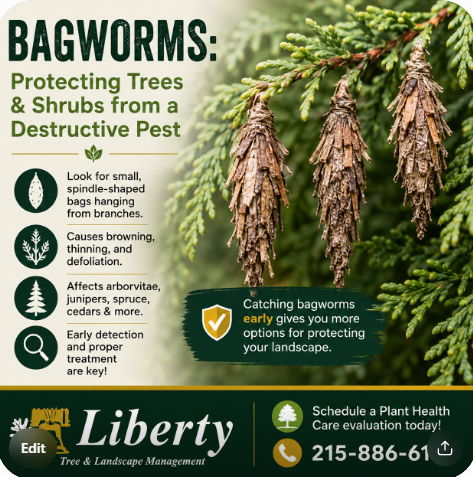
Bagworm caterpillars create distinctive spindle-shaped bags made from silk and pieces of foliage from the plants they are feeding on. Because these bags often blend into the surrounding branches, an infestation can go unnoticed until significant feeding damage has occurred.
Early detection and proper treatment timing are important. Left unmanaged, large populations of bagworms can cause extensive defoliation, weaken plants, and potentially lead to permanent damage.
Recognizing the Signs of Bagworm Damage
One of the easiest ways to identify a bagworm infestation is to look for the small, hanging bags attached to branches and foliage. These bags may initially be difficult to spot because they are covered with pieces of leaves and needles from the host plant.
As bagworms feed, homeowners may notice:
- Small, spindle-shaped bags hanging from branches
- Browning or thinning foliage
- Missing needles or leaves
- Bare sections of branches
- Increasing numbers of bags throughout the plant
- Significant defoliation during heavier infestations
- Overall decline in plant appearance and health
Evergreens can be particularly vulnerable to severe bagworm damage. Unlike many deciduous plants, evergreens may not readily replace foliage that has been completely removed from older branches. This means a heavy infestation can leave lasting bare areas and, in severe cases, contribute to the death of portions of the plant or the entire plant.
Bagworm populations can also increase significantly from one season to the next when they are not addressed.
Professional Bagworm Management
At Liberty Tree & Landscape Management, our Plant Health Care team can inspect trees and shrubs for bagworms, evaluate the extent of feeding damage, and determine an appropriate management strategy.
Timing is especially important when treating bagworms. Treatments are generally most effective when the caterpillars are young and actively feeding. Once bagworms become larger and their protective bags are well developed, management can become more difficult.
Our Plant Health Care professionals can evaluate the pest’s stage of development, the plants affected, and the severity of the infestation before recommending treatment.
A customized Plant Health Care plan may include:
- Inspection for active bagworm populations
- Identification of affected trees and shrubs
- Properly timed treatments when appropriate
- Monitoring for additional activity
- Evaluation of plant health following feeding damage
- Recommendations for reducing additional environmental stress
Our goal is not only to address the current pest problem but also to help protect the long-term health and appearance of your landscape.
Check Your Trees and Shrubs Regularly
Homeowners can play an important role in catching bagworm infestations before extensive damage occurs.
Regularly inspect arborvitae, junipers, spruce, cedars, and other susceptible plants for small bags attached to the branches. Bagworms can be easier to identify when you know what to look for, so pay particular attention to plants that suddenly develop thinning or brown areas.
Homeowners can also:
- Inspect susceptible plants throughout the growing season
- Look closely inside dense evergreen foliage for bags
- Remove accessible bags by hand when appropriate
- Dispose of removed bags rather than leaving them near the plant
- Monitor plants that experienced bagworm activity in previous years
- Keep trees and shrubs properly watered during extended dry periods
- Avoid unnecessary stress to already damaged plants
- Schedule a professional Plant Health Care inspection if activity is widespread
If you discover numerous bags or significant foliage damage, professional evaluation can help determine the appropriate next step.
Helpful Photos
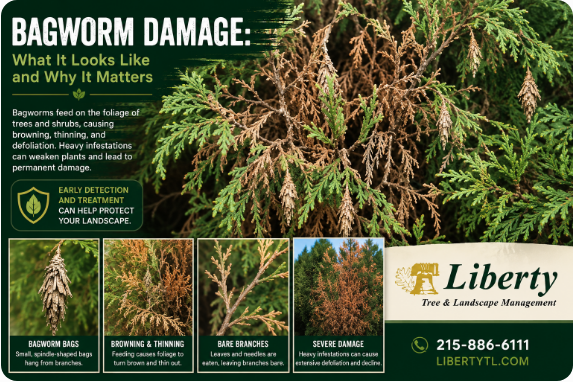
Evergreens such as arborvitae, junipers, cedars, and spruce can be especially vulnerable because heavily damaged areas may not readily grow back.
Keep an eye out for the small, spindle-shaped bags hanging from branches. Early detection and properly timed treatment can help limit damage and protect the long-term health of your landscape.
Protect Your Landscape Before Damage Becomes Severe
Established arborvitae, evergreens, and ornamental trees and shrubs can represent a significant investment in a property. They provide privacy, structure, screening, shade, and year-round visual interest.
A bagworm infestation can compromise those benefits surprisingly quickly. Because the bags blend into the plant, homeowners may not realize there is a problem until browning and defoliation become noticeable.
Catching bagworms early gives you more options for protecting your plants and limiting additional damage.
If you notice small hanging bags, unexplained browning, thinning foliage, or bare branches on your trees and shrubs, Liberty Tree & Landscape Management can help identify the problem and determine the appropriate management strategy.
Schedule a Plant Health Care evaluation today.