
Introduction Headline
Spotted lanternflies have become a familiar sight throughout Pennsylvania, but their continued presence should not be ignored. These invasive insects feed on the sap of trees, vines and other plants, potentially weakening valuable landscape plants and creating an unpleasant mess around the property.
Early identification and properly timed spotted lanternfly treatment can help reduce populations, protect vulnerable plants and prevent the insects from becoming an overwhelming nuisance.

How Spotted Lanternflies Affect Trees and Landscapes
The spotted lanternfly is an invasive planthopper first discovered in Pennsylvania in 2014. It feeds on many types of plants, with a particular preference for tree-of-heaven. It may also be found on grapevines, maples, black walnut, birch, willow and other landscape plants.
Large populations can remove significant amounts of sap, placing additional stress on affected plants. Spotted lanternflies also release a sticky substance known as honeydew. This material can coat leaves, patios, outdoor furniture, vehicles and other surfaces beneath infested trees.
Honeydew can encourage the growth of black sooty mold, which may interfere with photosynthesis and affect the appearance of plants. It can also attract bees, wasps, ants and other insects.
Signs of a spotted lanternfly infestation may include:
- Groups of spotted lanternfly nymphs or adults on trunks and branches
- Gray, mud-like egg masses on trees or outdoor objects
- Sticky honeydew beneath affected plants
- Black sooty mold on leaves, bark or nearby surfaces
- Increased bee, wasp or ant activity around infested trees
- Oozing or weeping areas on tree trunks
Although spotted lanternflies do not bite or sting people or pets, heavy populations can become a major nuisance and may contribute to plant stress.
Professional Spotted Lanternfly Management
Liberty Tree & Landscape Management can inspect your property, identify spotted lanternfly activity and recommend a management plan based on the insect’s life stage, the plants affected and the severity of the infestation.
Our Plant Health Care team may recommend:
- Inspecting trees and shrubs for spotted lanternflies and egg masses
- Identifying tree-of-heaven and other preferred host plants
- Evaluating affected plants for stress or additional health concerns
- Applying properly timed treatments when appropriate
- Monitoring activity throughout the growing season
- Creating a broader Plant Health Care plan for vulnerable trees
Because spotted lanternflies move between properties and plant material, one treatment may not eliminate every insect. A professionally planned management program can help reduce populations while protecting valuable trees and limiting unnecessary pesticide use.
Useful Tips for Homeowners
Homeowners can help reduce spotted lanternfly populations and slow their spread by taking several practical steps:
- Inspect trees, vehicles, trailers, firewood, outdoor furniture and equipment for egg masses.
- Scrape and destroy egg masses when they are found.
- Check vehicles and outdoor items before traveling to prevent transporting the insects.
- Destroy spotted lanternfly nymphs and adults when practical.
- Learn to recognize tree-of-heaven, one of their preferred host plants.
- Avoid applying homemade sprays or unregistered products that could harm plants, beneficial insects or the surrounding environment.
- Contact a qualified Plant Health Care professional before applying treatments to large or valuable trees.
Sticky bands can unintentionally trap birds, beneficial insects and small animals. If traps are used, homeowners should follow current professional guidance and select a wildlife-safe design, such as an appropriately installed circle trap.
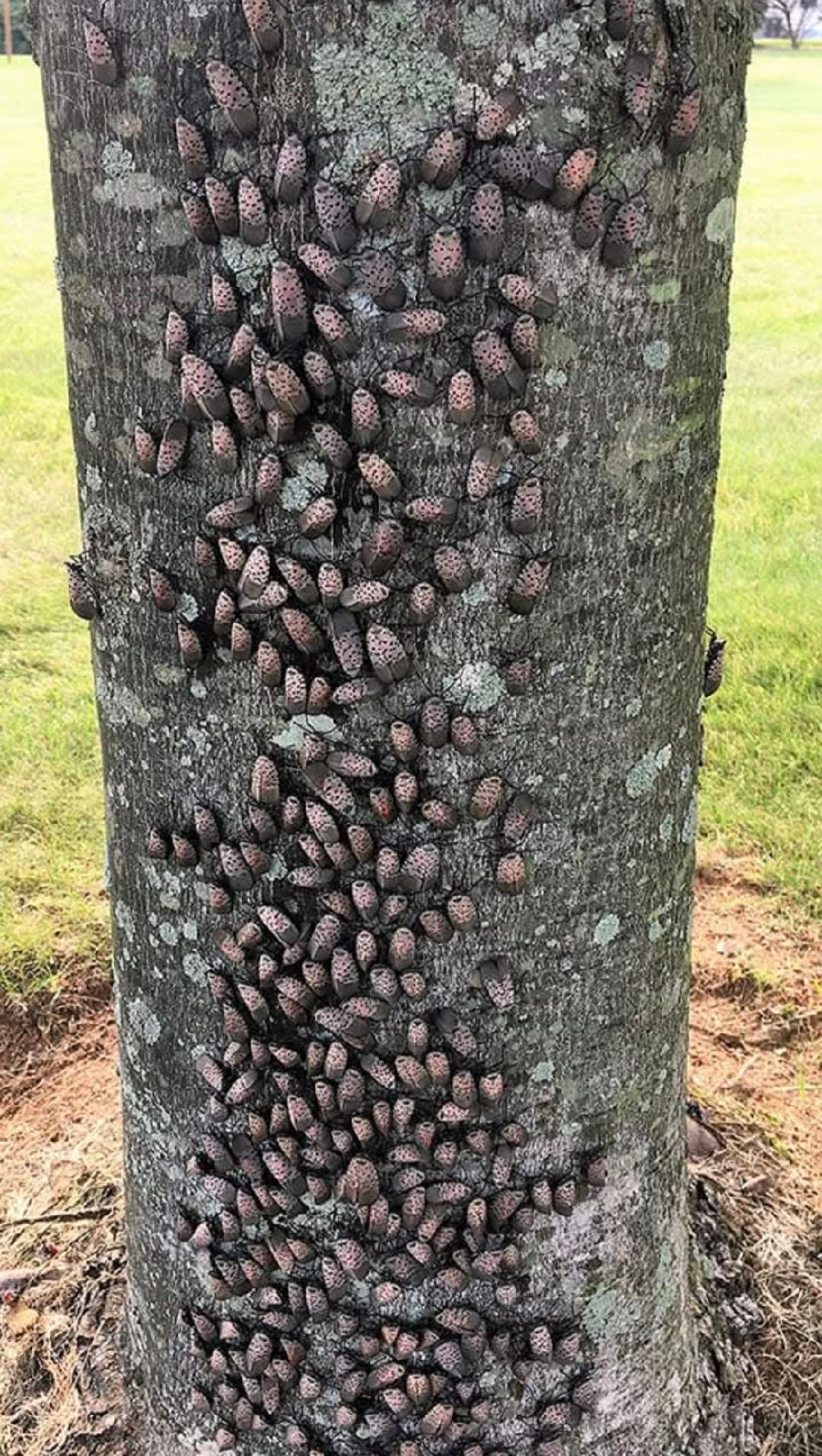
Spotted lanternflies covering a tree trunk—a sign of a heavy infestation that may place additional stress on the tree and require professional evaluation and treatment.
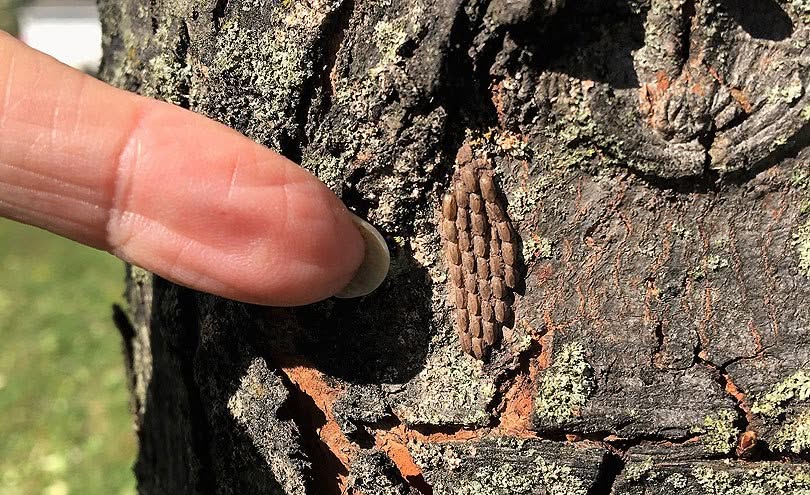
Spotted lanternfly eggs are grouped together and called an egg mass. Each egg mass typically contains 30–50 eggs and may look like a gray or tan smear of dried mud.
Why It Matters
Spotted lanternflies affect more than the appearance of a property. Their feeding can place additional stress on plants, while honeydew and sooty mold can make outdoor areas difficult to enjoy. They also threaten Pennsylvania’s vineyards, nurseries, agriculture and other plant-based industries.
Identifying activity early and using responsible management methods can help protect your landscape while supporting broader efforts to limit this invasive pest.
Schedule a Property Evaluation
If you are seeing spotted lanternflies, honeydew or black sooty mold around your property, Liberty Tree & Landscape Management can help evaluate the affected plants and recommend an appropriate course of action.
Call Liberty Tree & Landscape Management at 215-886-6111 to schedule an inspection or learn more about spotted lanternfly treatment.